Freeze warning checklist: a 6-hour frozen-pipe plan
A freeze warning is useful lead time. Spend it finding the pipes most exposed to cold, learning who may operate the main water shutoff, and writing the call sequence you will use if a faucet slows to a trickle.
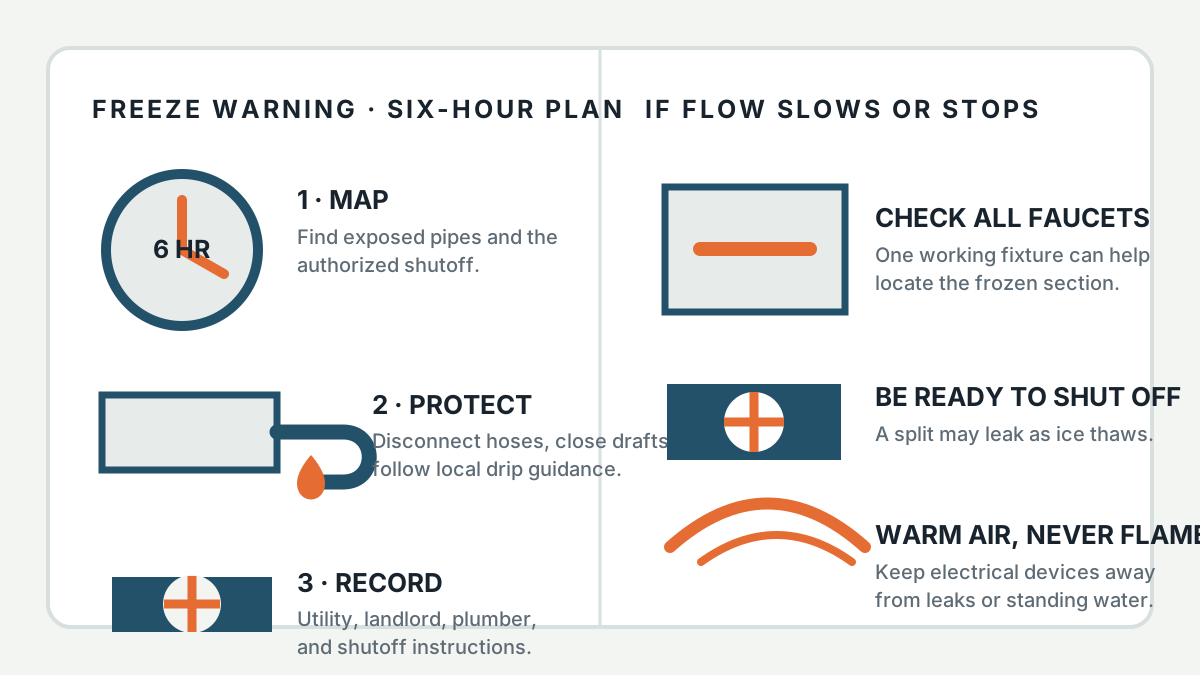
Map the pipes that meet cold air first
Water expands as it freezes. The American Red Cross identifies exposed outdoor lines, supply pipes in unheated basements, crawl spaces, attics, garages and cabinets, and pipes against poorly insulated exterior walls as frequent trouble spots. The first useful question is not “How cold will it get?” but “Where can outside air reach this plumbing?”
Walk the home before temperatures fall. Look for a hose still attached to a spigot, a cracked crawl-space opening, a sink on an outside wall, a water meter in an unheated garage, and supply lines near a basement window. Note which fixtures have frozen before. Do not enter locked utility rooms, crawl into unsafe spaces, or remove building insulation.
Mark the household shutoff only after an authorized person identifies it. A tagged valve behind boxes is not an emergency plan. Clear a safe route to it, keep the correct tool nearby if your utility permits one, and record who is allowed to operate it. Portland Water Bureau notes that people in apartments or multifamily buildings may need property management to shut off the water.
Use the warning window in this order
- Six hours out: make the calls. Save the water utility outage number, building emergency-maintenance number and a licensed plumber. Ask which pipes need attention and whether local guidance calls for dripping a faucet.
- Five hours out: disconnect outdoor hoses. A connected hose can trap water. If the plumbing has a dedicated indoor valve for an outdoor spigot, follow its documented procedure; do not improvise with an unknown valve.
- Four hours out: close cold-air paths. Close garage doors when water lines run through the garage. Secure broken windows or obvious drafts without blocking required combustion-air vents.
- Three hours out: open the right cabinets. Where local guidance recommends it, open sink cabinets on exterior walls so room air reaches the pipe. Move cleaners, medicines and sharp objects beyond the reach of children and pets first.
- Two hours out: protect heat and information. Keep the thermostat at the locally recommended setting, charge phones, test flashlights, and review utility alerts. Do not use an oven, grill or improvised flame for heat.
- One hour out: follow local faucet instructions. EPA and Red Cross guidance supports a slight, continuous drip from the faucet served by an exposed pipe during extreme cold. A landlord or utility may give more specific directions for your building and water conditions.
Dripping is not a magic temperature guarantee. Plumbing layouts, insulation, wind exposure, duration of cold and utility capacity differ. Public discussions repeatedly ask whether one faucet is enough or whether every tap should run. The safest answer is to identify the exposed run and follow local or building-specific instructions rather than copy a stranger’s layout.
A renter’s freeze-warning call sheet
Renters often control the thermostat and cabinet doors but not the building shutoff, pipe insulation or outdoor valves. Contact management while roads and phones still work. Report a known cold spot, low-flow fixture, broken window or unheated utility area in writing, and keep the wording factual.
Who answers after hours? Who may close the building water? Which faucets, if any, should drip?
Time, contact method, instructions received, fixture condition and photographs of visible leaks or frost.
Locked rooms, street valves, unapproved heat tape, open flames and electrical tools near water.
If water begins leaking, move people, pets and belongings away. Do not touch wet electrical equipment. Call building emergency maintenance and emergency services when water is contacting electrical equipment or creating an immediate safety hazard.
If the heat or power fails during the freeze
A warm room plan protects people; it does not guarantee that distant pipes remain warm. Start with the one-room no-heat plan, then add a plumbing watch: note indoor temperature, check the most exposed fixtures for changing flow, and keep the shutoff route clear.
CDC warns never to use a generator, grill, camp stove or similar fuel-burning device inside a home, garage, basement or near doors, windows and vents. Do not heat the home with a gas oven. Keep a battery-operated carbon monoxide alarm working and use the carbon monoxide safety plan before any approved backup equipment is needed.
When indoor temperature continues falling or vulnerable household members cannot stay safely warm, relocation can be safer than defending the building. Follow local emergency-management instructions and tell the property manager what you observed. Do not leave an unauthorized heater running unattended.
If a faucet slows to a trickle or stops
A trickle during severe cold can indicate a frozen pipe, but first check whether the utility has reported a service outage. Test other faucets. If some work and one does not, the frozen section may be inside the building. Frost on a visible pipe, a bulge, or unusual sounds increase concern.
- Stop and locate the shutoff. Be ready for a split to leak when ice melts. Renters should call management; owners should follow the utility or plumber’s procedure.
- Keep the affected faucet open when official guidance for the situation says to do so. The Red Cross explains that flowing water can help as the ice melts.
- Warm slowly. Use warm air from a hair dryer, an electric heating pad, or hot-water-soaked towels only when the pipe is accessible and the area is dry. Work from the faucet toward the cold section.
- Never use a torch or open flame. Do not use electrical devices near a leak or standing water. Do not leave a portable heater unattended or near combustibles.
- Check every faucet. One frozen line can signal that other exposed runs are also at risk.
- Call a licensed plumber when the pipe is hidden, inaccessible, damaged, cannot be located, or does not respond to safe warming.
Official sources differ on whether to shut off water before attempting to thaw because the correct response depends on suspected damage and the system. Local utilities may advise shutting off first when an unseen crack is possible. This is exactly why the shutoff and call sequence belong on paper before the freeze.
If the pipe has burst or starts leaking
Close the authorized main or fixture shutoff immediately, then call the property manager or plumber. If water is near electrical equipment, do not enter or touch it; call emergency services or the electric utility as appropriate. Move belongings only when it is safe.
Photograph the source and damage without delaying the shutoff. EPA says broken pipes and wet materials should be repaired and dried promptly to reduce water damage and mold risk. Follow insurer, landlord and local public-health instructions for cleanup. Do not energize wet equipment.
After repair, have the system returned to service by the responsible professional or per utility instructions. A sudden full-pressure restart can expose a crack that was not visible while frozen. Confirm the water heater’s correct status before draining or repressurizing anything; water-heater procedures vary and should not be guessed.
Print this freeze-response card
Before temperatures fall
Exposed pipe or fixture: ______________________________
Authorized shutoff location: ___________________________
Person allowed to operate it: __________________________
Water utility: ________________________________________
Landlord / emergency maintenance: _____________________
Licensed plumber: ____________________________________
Local faucet instruction: ______________________________
If flow slows or stops
Time noticed: __________ Other faucets checked: ________
Utility outage checked: ☐ Management called: ☐
Leak, frost or bulge observed: __________________________
Water shut off by: ____________________________________
Keep the card near the household outage notes, not behind the valve. Run a two-minute drill: one person points to the shutoff, one reads the call list, and everyone identifies where they would move if water reached electrical equipment.
Questions households ask before a hard freeze
Which faucet should drip?
Follow your local water utility or building manager. When dripping is advised, official guidance often prioritizes the faucet served by an exposed pipe, especially on an exterior wall. A universal one-faucet rule cannot account for hidden branches or building-specific plumbing.
Should hot and cold water both run?
Some local instructions specify cold water; some buildings may identify both supplies as vulnerable. Follow the instruction for the actual exposed line rather than increasing flow everywhere. If you cannot identify it, ask the utility, manager or plumber before the freeze.
Can I use heat tape at the last minute?
Only a listed product installed exactly as directed and approved for that pipe and building should be considered. Renters need authorization. Damaged, overlapping or incorrectly applied products can create fire or electrical hazards.
What if I cannot reach management?
Use the building’s posted emergency number, document attempts, and call the water utility when a break threatens ongoing water loss. Call emergency services for immediate hazards involving electricity, structural safety or people in danger.