The power is out. Keep combustion outside.
A portable generator can keep a refrigerator cold, but its exhaust can turn an outage into a carbon monoxide emergency. Decide where every fuel-burning device may operate before the lights go out, then mark the safe setup so nobody improvises in rain, snow, or darkness.
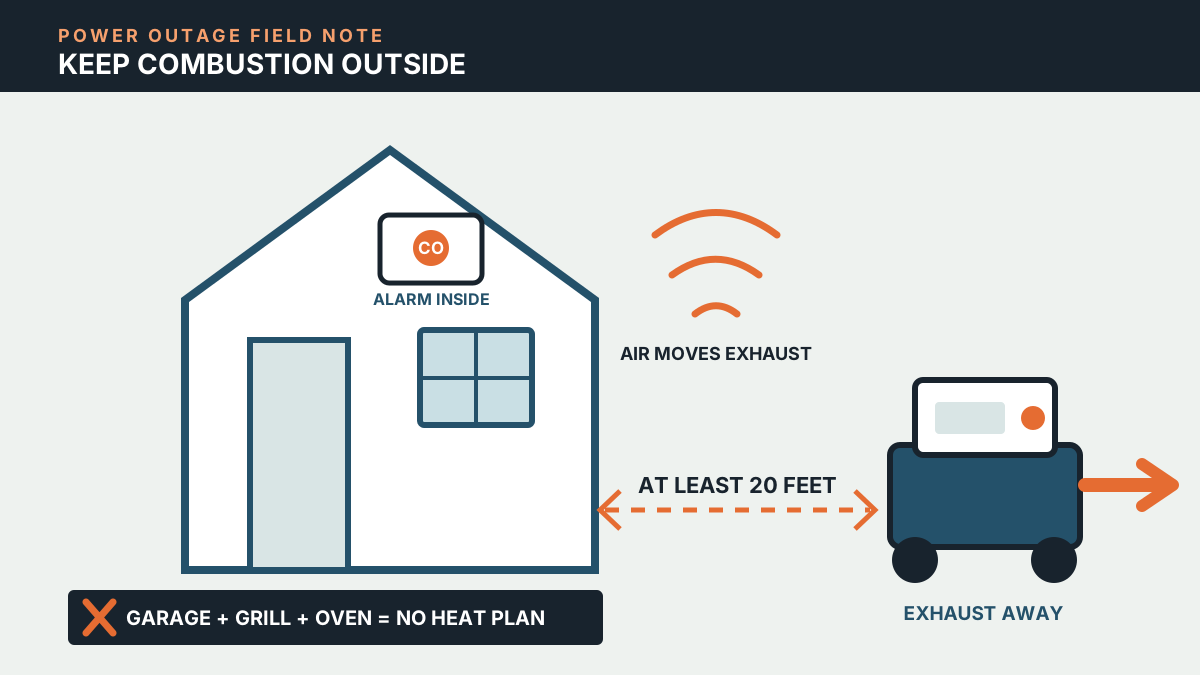
Use five non-negotiable rules
Carbon monoxide, or CO, is produced when fuel burns. You cannot see or smell it, and exposure can make people too confused or weak to rescue themselves. During an outage, the usual sources multiply: portable generators start, vehicles idle, and households reach for grills, camp stoves, propane heaters, or a gas range.
Outdoors only, at least 20 feet from homes and buildings, with exhaust directed away from every opening.
Outdoors only. A garage, basement, camper, porch enclosure, or open doorway is still the wrong place.
Move everyone outside, call 911, and wait for responders to clear the building.
- Never run a portable generator in a home, garage, basement, crawlspace, shed, or other enclosure. An open door, open window, box fan, or cracked garage door does not make that setup safe.
- Do not burn charcoal or operate a grill, camp stove, or outdoor heater indoors. “Outdoor” on the label describes where it belongs.
- Never use a gas oven or range to heat the home. Use only appliances intended and installed for indoor heating, exactly as their instructions require.
- Never idle a vehicle in an attached garage. Open garage doors do not prevent exhaust from entering the house.
- Treat CO alarms as a last warning layer. An alarm does not make unsafe placement acceptable, and silence does not prove the air is safe.
Mark a 20-foot portable-generator site
CPSC’s current guidance is specific: operate a portable generator outdoors, at least 20 feet from homes and buildings, and point the exhaust away from windows, doors, and vents. Measure the distance now with a tape rather than estimating during an outage. The route should also account for a neighbor’s building, not only your own.
Walk the exterior and identify every path exhaust could use: doors, windows, dryer and bathroom vents, furnace intakes, window air conditioners, crawlspace vents, garage openings, and low soffit vents. Choose a level outdoor point at least 20 feet from the house and other buildings. Mark it on a simple property sketch and, if practical, with a durable ground marker. Draw the exhaust direction on the sketch.
A detached shed is still an enclosure. A carport or porch can trap exhaust and may sit too close to openings. A generator placed just outside an open garage door can send exhaust straight inside. The 20-foot measure and exhaust direction work together; neither replaces the other.
Permanent standby systems are a different category. They should be selected and installed to their listing, manufacturer instructions, permits, and local code by qualified professionals. Do not move or alter an installed standby unit based on a portable-generator diagram.
Plan the electrical connection before the outage
For a portable generator, decide which small number of loads are truly necessary and check the generator and appliance manuals. Individual appliances may be connected with intact, heavy-duty extension cords rated for outdoor use and sized for the load. Keep plugs and connections dry and out of walking paths.
If the plan is to energize household circuits, have a qualified electrician install approved transfer equipment. Never try to power house wiring through a wall outlet. That practice, often called backfeeding, can energize utility lines and endanger workers and neighbors. A carbon monoxide plan and an electrical plan belong on the same page because a last-minute cord or connection change often causes someone to move the generator closer to the building.
Plan for rain, snow, security, and refueling
Bad weather creates the question that leads many generators into garages: how can the machine stay dry? Solve it through the manufacturer’s instructions before buying or building any cover. CPSC says to follow manufacturer instructions to reduce shock hazards during wet weather. CDC also advises protecting the generator so rain and snow do not reach it while keeping it at least 20 feet from doors, windows, and vents.
Do not improvise with a loose tarp, small tent, shed, or enclosure that can trap exhaust, overheat, catch fire, or interfere with airflow. Use only a setup that the generator manufacturer allows, preserves outdoor ventilation, keeps exhaust aimed away, and keeps electrical connections dry. If safe operation is not possible in the weather, leave the generator off and use the non-combustion backup plan.
- Keep snow, leaves, and debris away from the exhaust and cooling openings.
- Route outdoor-rated cords where they remain dry and cannot be pinched by a door or buried in snow.
- Turn the generator off and let it cool before refueling; spilled fuel on a hot engine can ignite.
- Store fuel in approved containers and follow local fire rules and the manufacturer’s instructions.
- Secure the generator only in a way that preserves safe distance, airflow, access, and exhaust direction.
- Inspect and maintain the machine on schedule. A CO shut-off feature is useful, but it does not permit indoor or close-to-building operation.
Check every room, garage, and vehicle
Generators get most of the attention, but the room-by-room check should cover every device that burns gasoline, propane, natural gas, oil, wood, or charcoal. Tape the following list inside the outage supply bin:
- Kitchen: never use a gas oven or range for space heating. Do not bring a camp stove, charcoal grill, or propane grill inside to cook.
- Living and sleeping areas: use a fuel-burning space heater only if it is specifically approved for indoor use, and follow its ventilation, clearance, fuel, and operating instructions. Never sleep beside an unapproved combustion device.
- Garage and basement: no portable generator, pressure washer, grill, camp stove, or running engine, even when doors or windows are open.
- Vehicle: move the vehicle completely outdoors before starting it. Clear snow from the tailpipe before use, and never warm the car in an attached garage.
- Camper or temporary shelter: do not assume a small space is safe because it has a vent. Keep generators and outdoor cooking equipment outside and away from openings according to official and manufacturer guidance.
- Mechanical room: do not block furnace, water-heater, fireplace, or boiler vents. Arrange professional service when an appliance, vent, or chimney shows damage, soot, corrosion, or other trouble.
Do this check with everyone who might set up equipment, including teenagers, relatives, tenants, and neighbors sharing power. Write “never in the garage” directly on the generator plan. Clear language matters when the person starting the machine was not the person who bought it.
Make CO alarms the backup layer
Install and maintain CO alarms according to the alarm manufacturer and local requirements. CPSC advises alarms on every level of the home and outside sleeping areas. Use battery-operated units or alarms with battery backup so a utility outage does not silence them. Check each alarm’s test procedure, battery schedule, end-of-life signal, and replacement date before storm or winter-outage season.
A smoke alarm does not detect CO unless it is a listed combination unit. Keep the sound and emergency action familiar to children and to anyone who may need help exiting. If a household member cannot hear a standard alarm, choose compatible alerting equipment that meets their access needs.
Do not wait for an alarm when several people develop similar symptoms, especially during generator or heater use. Alarms are a backup for prevention, not a real-time clearance meter and not a reason to shorten the 20-foot distance.
Recognize symptoms, get outside, and call
CDC lists headache, dizziness, weakness, upset stomach or nausea, vomiting, chest pain, and confusion among the most common symptoms of CO poisoning. Heavy exposure can cause loss of consciousness and death. A sleeping person, or someone impaired by alcohol or another substance, may die before recognizing symptoms.
Possible CO illness can look like flu or exhaustion. Think about the setting: a power outage, a running engine or heater, no fever, or several people becoming ill at once are reasons to act. If an alarm sounds or symptoms could be related to CO:
- Tell everyone to leave immediately and move into fresh air.
- Call 911 or the local emergency number from outside.
- Do not drive yourself if you are ill; wait for medical help or have someone else transport you as responders direct.
- Do not re-enter to silence the alarm, turn off equipment, retrieve belongings, or investigate. Wait for emergency responders to say the space is safe.
Include pets in the exit plan, but never delay a human evacuation or re-enter a contaminated building. Tell responders which people and animals may still be inside.
Run a 15-minute pre-outage site walk
- Walk the building exterior and mark windows, doors, vents, air intakes, crawlspace openings, attached garages, and neighboring structures.
- Measure and mark a portable-generator point outdoors at least 20 feet from homes and buildings, with exhaust directed away from openings.
- Write the permitted wet-weather setup from the owner’s manual; do not leave this decision for a storm.
- Lay out the intended outdoor-rated cords without powering equipment. Confirm that doors will not pinch them and the generator will not move closer.
- Test CO alarms, note their replacement dates, and make sure battery backup works.
- Point out the no-burn locations: every room, garage, basement, crawlspace, shed, camper, and enclosed porch.
- Practice the alarm response: everyone outside, call 911, stay out.
If the property cannot provide a compliant portable-generator location, choose a different backup. Battery power stations can support selected small loads within their ratings without combustion exhaust. The household can also prioritize cold storage, charge devices elsewhere, use a community warming or cooling center, or relocate before a medical or temperature need becomes urgent. Limited space is a reason to change the power plan, not to move an engine into the garage.
Put this site sheet beside the household’s power-outage sequence and the refrigerated-medicine plan. For a low-cost first pass, use the weekly readiness reset to test alarms, copy instructions, and mark the property before buying equipment.