Refrigerated medicine during a power outage: write the plan first
“Keep refrigerated” is the start of a plan, not the whole plan. Before an outage, record the exact storage range, room-temperature allowance, replacement contact, and next safe step for each product.
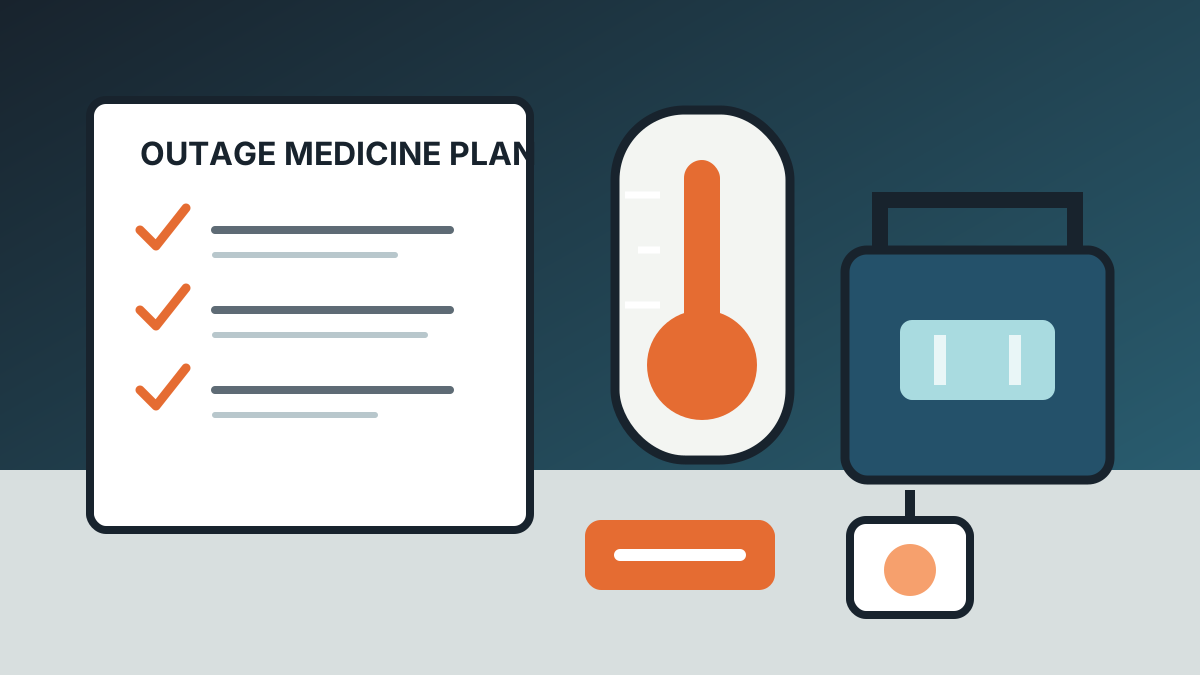
Build a one-page medicine record
Take every medicine that normally lives in the refrigerator and make one row for it. Copy the full product name, strength, formulation, lot number, expiration date, current quantity, and the storage language from its label or instructions. Add the manufacturer’s medical-information number, the pharmacy’s regular and after-hours numbers, the prescriber, and your insurance information.
Then ask the pharmacist four questions for that exact product:
- What temperature range applies before opening and after opening?
- How long may this product remain at room temperature, and what range counts as room temperature?
- Must it be protected from freezing, light, shaking, or direct contact with ice?
- After an unknown temperature excursion, whom should I call before using or discarding it?
Write the answers. Do not rely on memory during an outage. A medicine’s instructions can differ from another product in the same broad category, and switching products or doses is a clinical decision.
Set up the refrigerator and backup
Keep a refrigerator thermometer where it can be read without moving the medicine. Store the product in its original packaging and in the location described by its instructions. Avoid a refrigerator door if the label requires a stable refrigerated temperature; doors warm with repeated opening. Do not put medicine in direct contact with a freezer compartment or an ice pack unless the manufacturer specifically allows it.
Prepare a small outage kit beside the written record:
- An insulated cooler large enough for the product and a barrier layer.
- Cold packs or another cooling method permitted for the product.
- A separate thermometer for the cooler.
- Resealable bags to protect packaging from moisture.
- A permanent marker, tape, and a paper temperature-and-time log.
- A flashlight and charged power bank.
- Pharmacy, manufacturer, prescriber, utility, and local emergency contacts on paper.
A cooler is useful only if it holds the required range without freezing the product. Practice loading it with a harmless stand-in and watch the thermometer. If the pack touches the medicine and creates a frozen spot, the setup has failed even if the rest of the cooler looks cold.
Ask the utility whether it maintains a medical-needs or outage-notification program, while recognizing that enrollment does not guarantee uninterrupted service or priority restoration. Decide where you could go if safe storage or powered equipment cannot be maintained: a relative’s home, an accessible shelter, a clinic, or another location confirmed in advance.
When the power goes out
Write down the outage start time. Keep the refrigerator and freezer closed. FDA guidance for refrigerated medical devices says most closed refrigerators and freezers maintain temperature for at least a day, but the real duration depends on the appliance, room conditions, starting temperature, and door openings. Your thermometer and product instructions are the evidence that matters.
Do not move medicine reflexively. Opening the refrigerator releases cold air; transferring a product to an untested cooler may expose it to freezing or water. Use the decision sequence you confirmed beforehand:
- Record the time and the refrigerator temperature.
- Check the product-specific plan without opening the door repeatedly.
- Call the pharmacist or manufacturer if the outage approaches the documented limit or the temperature leaves the allowed range.
- If advised to transfer, use the prepared cooler and keep logging time and temperature.
- If a life depends on the medicine and no safe replacement is immediately available, contact the prescriber, pharmacist, or emergency services for product-specific direction. Do not stop or change treatment on your own.
The CDC’s general disaster message says medicines that require refrigeration should usually be discarded after a day or more without power unless the label says otherwise, and life-sustaining refrigerated medicine may need to be used until replacement is available. That is an emergency fallback, not a universal storage rule. The current label, measured conditions, and qualified advice decide what applies to your product.
Insulin needs its own written instructions
FDA emergency guidance says many insulin products in manufacturer-supplied vials or cartridges may be kept between 59°F and 86°F for up to 28 days, while also warning that extreme heat reduces effectiveness and freezing can damage insulin. This does not mean every insulin presentation, pump reservoir, altered product, or combination follows one 28-day rule.
Record the instructions for the exact insulin and delivery system in use. Keep backup administration supplies and written doses, and make sure the person using them knows how. FDA advises insulin-pump users to keep extra batteries and parts, backup insulin and supplies, storage information, and emergency contact numbers. A prescriber should establish any backup dosing method before the outage.
When power returns
Before the refrigerator cools again, record its temperature and the time power returned. Note the highest or lowest reading available, how long the power was off, whether the door opened, whether the medicine moved, and any time it spent in a cooler. Keep questionable products separated and labeled so no one uses or discards them by mistake.
Call the pharmacist or manufacturer with the exact product and your time-temperature record. Ask whether to continue using it, replace it, or discard it, and how to dispose of it. Appearance alone cannot confirm potency or safety. Do not put a product back into routine stock and assume refrigeration reverses a temperature excursion.
If the medicine or packaging contacted floodwater, sewage, fuel, or another contaminant, tell the pharmacist. Temperature is only one part of the decision.
Plan separately for powered medical devices
A refrigerator plan does not cover an oxygen concentrator, ventilator, suction pump, infusion pump, home dialysis equipment, powered mobility device, or electric bed. For each device, ask the supplier and healthcare team what happens during a power interruption, how long its battery lasts under normal use, what backup power is approved, and what interruption requires calling emergency services or relocating.
HHS’s emPOWER program exists because millions of people living independently rely on electricity-dependent medical equipment or essential health services. At home, the useful response is a personal trigger: “At this battery level, or after this many minutes without power, we leave or call.” Test alarms and batteries on the manufacturer’s schedule. Never run a fuel-burning generator indoors or near doors, windows, or vents.
Run a 15-minute drill
- Choose one refrigerated medicine and find its current label and instructions.
- Fill in its permitted temperature range and room-temperature allowance.
- Put the pharmacy, manufacturer, prescriber, and insurance numbers on paper.
- Read the refrigerator thermometer without moving the medicine.
- Load a stand-in item into the cooler and check whether the temperature stays in range without freezing.
- Name the exact condition that means you call, replace the product, or relocate.
Add this sheet to the household’s broader power-outage sequence. If money is tight, the low-cost readiness reset can help prioritize thermometers, contact records, and a tested backup plan before buying extra equipment.