A wildfire warning is working time: use the first 30 minutes
A warning is the moment to reduce delay. Confirm what the alert means where you live, gather the few things that are hard to replace, load the car, and decide whether your household should leave before an order.
First, name the alert correctly
Wildfire language is easy to blur together when several notifications arrive at once. A National Weather Service Red Flag Warning means critical fire weather is occurring or expected soon. It does not necessarily mean that a fire is burning near your home. An evacuation warning, level, recommendation, or order comes from local public-safety authorities. The exact terms and levels vary by jurisdiction, so the action printed in the local message matters more than a label remembered from another county.
Use two official channels. Start with the link or map supplied by your county, tribal, municipal, or state emergency agency, then confirm through a second official source such as its alert page, sheriff or fire department. Wireless Emergency Alerts can reach compatible phones in a targeted area without a subscription, but local opt-in systems may provide more detailed neighborhood information. Keep both enabled.
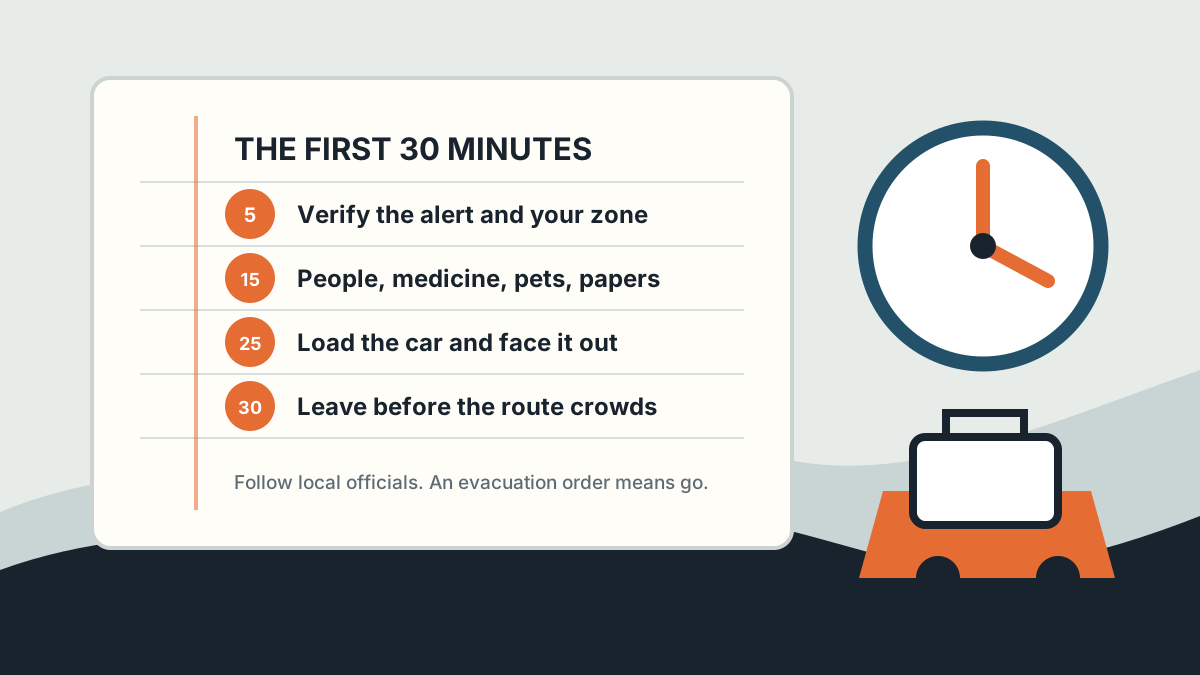
The 30-minute decision clock
This clock is for a warning or a credible nearby threat when officials have not yet ordered you to leave. It is a sequence, not a promise that you have half an hour. If conditions change, skip ahead and go.
Minutes 0–5: verify, locate, communicate
- Open the official alert and identify the affected zone, boundary, route, and time.
- Check whether your address is inside the warning area. Save a screenshot in case service becomes unreliable.
- Send one short household message: who is collecting whom, the meeting place, and the out-of-area contact.
- Put phones on charge and turn off battery-hungry background activity.
Do not use social posts or an unlabeled map as the deciding source. They can be useful for context, but evacuation boundaries and roads can change faster than reposts.
Minutes 5–15: people, medicine, pets, papers
Gather what becomes difficult or dangerous to replace overnight. Start with people who need assistance, prescription medicine, mobility and communication devices, and pets. The CDC recommends that people with chronic conditions prepare a seven-to-ten-day supply of prescription medicines in a waterproof, childproof container for wildfire evacuation.
- Daily medicine, rescue inhalers, refrigerated medicine in an insulated carrier, and a written medication list.
- Glasses, hearing-aid batteries, mobility equipment, chargers, and any power bank already charged.
- Pet carriers or leashes, medication, food, water, identification, and a current photo with the owner.
- Wallets, keys, phones, identification, insurance details, and one folder or encrypted drive of essential records.
- Closed shoes, long sleeves, water, and a well-fitting respirator if smoke is present and you can wear one safely.
Put every person and animal in the same ready area. A cat hiding under a bed or a relative waiting for a ride can consume the entire margin you thought you had.
Minutes 15–25: prepare the exit, not the property
Park facing the direction of travel, keep the driveway clear, and load only the prepared items. Check fuel or charge level and open the route on a phone, but keep a paper map in the vehicle. Close doors and windows as you leave. Follow local instructions about utilities; do not shut off gas unless officials or the utility tell you to do so.
This is not the time to climb onto a roof, run sprinklers, or start a long property-defense project. Those tasks can trap a household behind traffic, smoke, falling debris, or a blocked road. If there is time after the vehicle is ready, bring combustible doormats or light patio items inside without delaying departure.
Minutes 25–30: make the leave-early decision
Leaving during a warning can be the safer choice when your household needs extra travel time or has little room for error. Consider leaving before an order when any of these are true:
- Someone has limited mobility, relies on powered medical equipment, is pregnant, is very young, or has a heart or lung condition.
- You need to load livestock, multiple pets, or a wheelchair.
- Your neighborhood has one narrow exit, limited cell coverage, or a history of traffic bottlenecks.
- Smoke is worsening, visibility is falling, embers or ash are arriving, or breathing symptoms are not improving.
- Your destination is far away, the vehicle is low on fuel, or severe weather may affect the route.
Visible flames are not a useful threshold. Wind can push smoke and fire across roads, and an evacuation order can create a sudden traffic surge. Leaving early also frees road space for responders and for neighbors who could not depart sooner.
Three decisions to make before fire season
Name two destinations in different directions. Confirm which one accepts pets and what happens if hotels are full.
Write the earliest departure trigger for medicine, mobility, children, animals, or a single access road.
Enable Wireless Emergency Alerts, enroll in the local alert system, and bookmark the official evacuation map.
If you are already away from home
Do not drive back into a warned or ordered area unless officials say the route is open and it is safe to return. Use the household plan: contact the person assigned to children, pets, or relatives, then meet at the agreed destination. A go kit in the vehicle and copies of essential information reduce the urge to re-enter for equipment or documents.
A 15-minute drill for this week
- Find your local emergency-alert enrollment page and evacuation-zone map.
- Set a timer and place medicine, pet gear, documents, chargers, water, and shoes by the door.
- Load the vehicle and navigate one alternate route without entering a hazardous area.
- Record what slowed you down. Fix only the largest delay before the next drill.
The goal is not a perfect bag. It is a household that can understand an alert, make a decision, and move while roads and choices are still available.